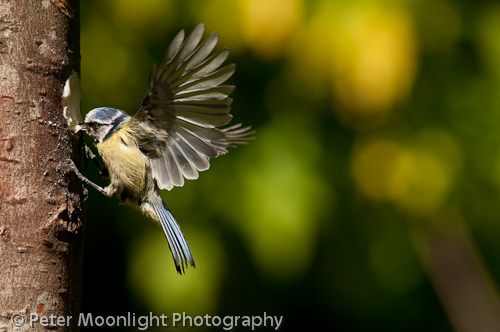
To view my galleries, find out more information about me, and to contact me, please visit my website.

Sunday, 6 November 2011

An impassionate string of passionate adjectives


It was cold. Very cold. Freezing. Bone-chilling. Or hot. Scaldingly so. Perhaps. It depends on the scene. Sometimes it is wet; never merely damp. A downpour will do. Or a torrent. Yes a torrent. And an severe one at that. Many inches in an hour. The most since records began.


It was more than I ever imagined, yet the image was in my mind from the start. It was desolate. Isolated. Barren and overwhelming. But serene, obviously. Quiet enough to make me pause, despite my deep personal suffering and the irresistible photographic potential, to feel at one with nature. Small. But passionate to articulate big things. An ardent conservationist irrespective of, but reinforced by, feelings experienced in the moment.

A cliché.

Some say the strongest photographs need not be accompanied by words. I disagree, words channel emotion and can make messages more pungent, but why do we always chose the same few? An impassionate string of the most passionate adjectives? Or an overly-dramatic behind-the-scenes expose of a walk in the park?

The Metro displays more inspiring vistas than my grandest photographs and the BBC NHU makes my most-arduous exploits look like walks in the park. Few lives are altered by the press of a shutter, so why pretend otherwise? If we are desensitised to sensationalism why not try something else?

I am far from the first to do this, and it is not the only other option, but with a little research I have found something much more penetrating than drama: facts that make you think.


Wednesday, 26 October 2011

Donna Nook, Again


If any of you who followed my link to Chris Weston's website following my last post on Donna Nook, you may be wondering why I am so concerned. Chris's website contains a news article, dated November 2010, in rebuke to the Lincolnshire Wildlife Trust's concerns that photographers harm seals' welfare.

To those without biological or statistical training, Chris' article probably has the look of an authoritative piece. Let me assure you that this is not the case. As the old saying goes, there are three types of lies: lies, damned lies, and statistics. Chris' article contains all three.

Chris starts his argument by stating that official figures show that seal colonies around the UK are declining. Chris does not reference this statement. The latest figures on Grey Seal numbers in the UK come from the the Sea Mammals Research Unit at St Andrews University. Their Special Committee on Seals report (2010) clearly states that Grey Seal numbers are increasing:

Populations in Canada, USA, and the Baltic are increasing.

The report also states, equally clearly, that this is a trend that has continued unabated since around 1960 (although there is evidence that growth is leveling off). Total UK Grey Seal pup production increased by 1.9% between 2008 and 2009, the very period Chris claims exhibited a decline.

Chris proceeds by using flawed statistics on his fabricated data. Paul Harcourt Davies has today pointed out in a comment on Niall Benvie's excellent post on the subject, that what follows is a logical fallacy:

In contrast to this declining trend ... Lincolnshire Wildlife Trust has recorded an increase in seal numbers at Donna Nook each year since 2007, a period that coincides with a large increase in photographic recreation at Donna Nook. Statistically, therefore, one could draw the conclusion that the reported increase in seal numbers is a direct consequence of the increase in photographers - post hoc ergo proctor hoc.

This is a widely known fallacy; namely,  if a follows b, a must have caused b. This is obviously rubbish: the sun did not rise today because I stubbed my toe yesterday.

Chris continues by reeling off a list of evidence from "studies", few of which are relevant and none of which are cited. While writing my article, I trawled the scientific literature for any studies relating to human behaviour and seal mortality. My searches were fruitless and the Sea Mammals Research Unit confirmed such studies do not exist.

This shows Chris Weston is willing to fabricate evidence and misuse statistics at the expense of seal welfare for nothing more than his own self-interest and commercial gain. Equally, he is willing to mislead others, spreading lies which probably do as much harm as Chris' own actions. This is, as Niall Benvie's post states, "a bad advert for the profession and isn't going to do anything to allay the suspicions of scientists who have never had a lot of time for photographers".

It will not surprise you to learn that neither Chris Weston nor Photographers on Safari have responded to my enquiries.


2011/01/11 - Edit:

Chris Weston no longer offers workshops to Donna Nook in response to the Lincolnshire Wildlife Trust's statement. Chris has responded to the statement and this article here:


Monday, 24 October 2011

Golden outlines

While I await a response from the two photographers leading photography tours to Donna Nook (see my previous post), I thought I would pass the time by explaining a new technique I have been experimenting with.


There are many ways to reduce a scene to its most simplistic elements. Silhouetting the subject is one, throwing the foreground or background out of focus is another. A subtler way is to use the low light of sunrise or sunset to outline the subject. This is not easy. The subject has to be against a dark background, the photographer must be at exactly the correct angle, and they must markedly underexpose the image depending upon the scene. Even if all of this is done correctly, the resulting images often require a huge amount of post-processing before they look as clean as the image above.

I have been working on a technique to artificially reproduce this affect using off-camera flash. I am sure I am not the first to try this and my experiments with the technique are still in their infancy, but I have already produced a few natural-looking images.


The basic technique is as follows:
  1. Find a subject with strong composition. No matter of good light will make a poor composition shine.
  2. Meter the scene to produce an almost-black image.
  3. Place an off-camera flashgun just out of shot pointing at both the camera and the subject.
  4. Cover the flash with a yellow filter. I use an filter designed for black and white photography but any yellow, transparent material should do (I have heard great things about Roses chocolate wrappers!)
  5. Increase the flash power to taste. Every scene requires a different amount of flash. Experiment with different powers to produce the desired affect.
  6. The more you point the flash at the camera, the more glare you will get. This is not necessarily a bad thing as it can still look quite natural.

This can produce very natural-looking images and has many advantages over using natural light: flash is much more predictable than sunlight and this technique can be done at any time of day, to name but two. The one problem I am having so far is that my images look a little too yellow. I have to correct this in photoshop by adding a little red, producing a more-orange image. This is still much less post-processing than usually required when using natural light. The question to ask is this:

Do you prefer your images to look almost right in-camera but use artificial light or do you prefer them to use natural light but need substantial editing?

If you prefer the latter, ignore this post; if you prefer the former, give it a go. Let me know how it goes!

Thursday, 20 October 2011

Photography Kills Seals at Donna Nook. Fact.

This is is not scientifically proven, but it is as close as we can get:

Photographers inadvertently kill seals at Donna Nook.

Last year, I published an article in Outdoor Photography magazine in response to several visits to Donna Nook. Each visit left me more disillusioned than the last until the picture in my mind was not one of an idyllic seal colony but one of hundreds of photographers scrambling over each other and, almost, their subjects to get the shot. I witnessed very little field craft and even less regard for seal welfare. Even the most casual observer could have seen that the status quo was damaging to the seals. I decided to investigate.

I spoke to the Lincolnshire Wildlife Trust's wardens, seal scientists, experienced wildlife photographers, and even the RAF to determine whether photographers were having an observable effect upon seal survival rates. The answer was a definitive "probably". Seal pup mortality rates had steadily climbed for four years, strongly correlating with photographer numbers. The scientists even had a convincing explanation of why; however, there was no proof other factors were not involved.

The result of my research was this article in Outdoor Photography, strongly urging photographers to stay away:


Fast-forward a year and there are more facts on the table. Throughout last year's pupping season, the Lincolnshire Wildlife Trust adopted a strong new stance to deal with photographers. Where they previously suggested photographers stayed away, they now strongly requested they do so. Their appeal even made the BBC News. Visitor numbers dropped by 80% from 1500 to just 314, all but two of whom were photographers.

The result surprised even me. An 80% drop in photographer numbers resulted in a 50% drop in seal pup mortality - a huge drop. Fewer seal pups died than they had in seven years. The wardens are not aware of any other change that could have caused this, especially considering it happened despite one of the coldest winters on record hitting hardest exactly when seals are at their most vulnerable. It is not a statistically significant, repeatable scientific experiment, but it is as close as we will ever get.

This is undoubtedly a good news story - fewer seals are dying - but it does raise a few questions. How many other sites are similarly affected by photographers? Will this happen at other pupping grounds in the future? Who are the 312 photographers who ignored the Trust's plea? Most, the trust says, were either foreign photographers or photography workshop members. Surely workshop leaders should lead by example and cancel their tours, especially since they have mostly been contacted by the Lincolnshire Wildlife Trust.

Not all sites are as cared for as Donna Nook is by the Trust. We can only hope Donna Nook was an isolated case but something tells me it is not. As wildlife photographers, even self-proclaimed conservation photographers, we must be responsible for our own actions and not be afraid to speak out about others'. We owe it to ourselves, our images, and our subjects: without them, we would be nothing.

In that spirit, here are the names of the main Donna Nook photography workshop leaders I know of:

I have emailed all three photographers and, if they respond, will post their replies on this blog.

Lastly, it goes without saying, I urge you, I plead with you, not to visit Donna Nook this year.

NB. This article refers only to Donna Nook's beach colony. Human activity (including photography) has no affect upon seals at the dunes colony. The dunes colony is a fabulous spectacle and one that provides huge scope for photography. I would not hesitate to recommend anyone visits - just avoid weekends!

Sunday, 27 February 2011

Exhibition!

I am proud to announce that my images will be part of a new exhibition at the Scottish Seabird Centre in North Berwick!


The exhibition starts tomorrow (Monday the 28th of February) and will go on for one month.

This will be Exposing The Wild's third exhibition, following our two in Preston and Abby St. Bathans last summer, and will include many of the same images. However, for those of you who attended either of these previous events, there will be new images for you to see as Samuel Waldron has been adding to our Scottish Project collection.

I look forward to hearing what you think.

Wednesday, 9 February 2011

Madagascar

From nose to tail, Brookesia minima stands less than 2cm long. Many creatures are smaller, countless insects and other invertebrates, but B. minima is a fully fledged reptile.

Probably the world's smallest chameleon - undiscovered species may be smaller - the dwarf chameleon's insignificant frame hides a pair of lungs, a brain, and a tiny heart. They are miniature ambush predators, slowly stalking through their monopoly-board sized leaf-litter territories, changing colour as they go. When prey is sighted, usually a fruit fly, B. minima angles both its independantly-controlled eyes forward, quickly judging distance. Despite their famed reflexes, few fruit flies can outmaneuver a B. minima's tongue, which grabs the fly before retracting it into its mouth, where it is greeted by a row of tiny teeth.


Brookesia minima is just one of the wonders of Madagascar's forests. Isolated since the time of the dinosaurs, Madagascar has a unique flora and fauna. Over 90% of its known species are found nowhere else. This includes the lemurs, a group of around one hundred primate species, most of which have been discovered in the last 20 years. Madagascar's lemurs are preyed upon by the fossa, an enigmatic if ugly relative of the weasel.


In Madagascar, geckos impersonate bark, insects impersonate lichen, and chameleons impersonate their surroundings. Aye-ayes fulfill the roll of woodpeckers, rodents fulfill the roll of rabbits, and tenrecs fulfill the roll of just about everything else. Malagasy evolution has ripped the rulebook in two, resulting in primevally odd creatures whose strangeness is only enhanced by Madagascar's unearthly landscapes.


A new BBC wildlife documentary series, Madagascar, is debuting tonight on BBC Two tonight at 8pm. As with all flagship BBC nature documentaries, the series will doubtless be cinematographically flawless, tell the island's story fluently, and leave the viewer awed.

Madagascar, though, is a conservationists worst nightmare. I was lucky enough to visit the Indian Ocean nation in 2008 and certainly left with a feeling of awe but this was tainted by another emotion: horror. Madagascar's conservation situation is truly dire.

A transport map of Madagascar would look like a wheel. The major towns and tourist sights are all dotted around the country's edge except for the capitol, Antananarivo (I did not lean on my keyboard there, that is really how it is spelled). To reach the edge, travelers must either negotiate miles of potholed dirt track or fly. Each flight, regardless of the destination, takes roughly an hour and the view from the window is as follows:

1) Five minutes of Antananarivo suburbs.
2) Fifty minutes of scorched red soil.
3) Five minutes of pristine forest.

All of Madagascar was once forested but its center is now as barren and red as Australia's great central desert. Slash and Burn agriculture has stripped the land bare, leaving only the native's sacred Baobab trees. The Baobabs of Baobab Avenue, a famed tourist beauty spot, only stand alone because the rest of the forest was felled for rice paddies. A previous BBC Documentary, Planet Earth no less, made no mention of this in a memorable sequence where a balloon-mounted camera drifted between the Baobabs.


Deforestation leaves nothing to stabilise the dry soil. Five years on, the land is either covered by a rampant non-native grass species or gone. Erosion in Madagascar is rapid and catastrophic; canyons often open within days. Red tsingy, a geological feature proudly displayed to tourists, may look as old as time but is in fact an erosional feature present only due to recent deforestation.


Madagascar's wildlife faces is facing a point of no return. It needs more than just another blue-chip documentary  highlighting its unique flora and fauna, something to show generations when it is gone. It needs a documentary that highlights the peril the country's wildlife faces, shows why it is worth saving, and can be used as a weapon to help halt biodiversity loss.


I will be watching tonight hoping that the BBC have produced such a weapon and not simply dismissed the conservationists message as something that diminishes valuable ratings.

Monday, 24 January 2011

There is Grandure in this view of life

A common claim by wildlife filmmakers and photographers is that their work forwards public awareness of conservation by sharing the artist's view of the natural world, but what view is it that they are actually forwarding?

Over the past 150 years, scientists have revolutionised our view of the natural world. Where before it was God's flight of fancy, Adam and Eve's playground, now it is a cold and unfeeling place. Brothers fight brothers, all creatures are hungry, and the majority die childless, afraid, and in pain in the jaws of a predator.


Our view of individual species has changed too. Our medieval ancestors readily attributed human traits and supernatural powers to the creatures around them. Each species reflected an aspect of the divine mind and was a part of God's greater purpose: to help us achieve salvation through studying his creation.

Each species was an allegory; a Hoopoe cares for its elders to show us to do the same, an owl is a dirty bird to show us what happens when we shun the light of Christ, and a virgin oyster produces pearls to show that virgin births are possible. Gods work was written throughout creation in the very human language of anthropomorphism.


Now scientists look to other species for lessons not of God but evolution. Every adaptation in every species has a history that tells us something about evolutionary processes; the origin of species. Species are not allegories but evolution's best attempt of adapting their forebears for their environment and it is written all over them.

Does this fit with how the media portrays organisms? It depends upon the species. Oddly, the more endangered a species the more we seem to see it in evolutionary terms. A Polar Bear is an unfortunate creature perfectly adapted for a rapidly disappearing environment; so are the Ethiopian Wolf and Orangutan. Conversely, the the Puffin is still a comical man in a suit while the Robin is the gardener's best friend.


In reality, any individual Puffin or Robin has to fight just as hard to survive and reproduce as any Polar Bear: Puffins must run a daily gauntlet of predatory seagulls when returning to their burrow to feed their chicks while Robins frequently kill each other in territorial disputes. Their worlds are no less brutal either: arctic gales batter Puffins cliff-top homes while harsh frosts freeze Robins to death as they sleep.

Is the reason this view is not always shown because it is not media friendly? I do not think so. The piece of television I believe most successfully portrayed every species' struggle in a harsh environment is the BBC's Planet Earth. While sometimes shocking and moving, the series contained moments of great beauty made even more so by the knowledge of their unlikely context and the unfeeling forces that created them. The series is an international commercial and critical success, having been sold to 130 countries.

Did Planet Earth's view of the world further a conservation agenda? Undoubtedly: humans love nothing more than unlikely beauty and conserve nothing more fervently than that which they love. Furthermore, the series contained just enough anthropomorphism to help the audience emphasise with its characters.


I am as guilty as anyone, many of my images seek to portray an ideal version of my subjects, but perhaps photographers and filmmakers should move with scientists and portray our world less as a twee, idyllic paradise and more as the interconnected, cutthroat, and yet still beautiful world it is. As Darwin said, "there is grandeur in this view of life".

Sunday, 16 January 2011

Does a picture say the right thousand words?

Time to spout an old cliché. If you have heard it once you have heard it a thousand times. An image really does say a thousand words.


There is though a problem with this cliché. If I were to show the image above - which shows the River Severn on its way to freezing in central Worcester for the first time in at least 30 years - to a group of people it would undoubtedly say different things to each of them.

Imagine the group contained Jill, the archetypal climate change activist, and Jeremy, a supercar-driving climate change skeptic. (Jeremy's personality and name, you understand, lends nothing to any famous climate change skeptics you may be thinking of)

Jill, through daisy-woven dreadlocks and a haze of scented candle smoke, might stare tearfully at the image before reaching to her guitar and improvising a ditty lamenting the rarity of true winters in our warming world.

Jeremy, meanwhile, would scoff. Ice, he might add, boastfully, as if stumbling upon a profound yet original thought, only forms when it is cold! When Peter took this image it was minus ten every night for a week! How can the world be warming, ridiculous?!?


Our prejudices inform how we interpret images. A two million year old South African hominid would look at an image of an eagle with fear. Eagles, after all, preyed upon their children.

If we fast forward to the 13th Century, the eagle has become the king of birds, fear has been transformed to reverence. Eagles are able to rejuvenate themselves by flying directly into the sun before rising, phoenix-like, from the flames.

Now eagles are pests or conservation symbols, a product of evolution or one of god's mightiest creations. Viewpoint is everything.


This eagle though is not wild, and neither was the one in the previous photograph. He is owned and flown daily by a man who cares deeply for it. Suddenly, just with a few words, the eagle has become a beloved pet or a cruelly-held captive animal.

Whereas, though, most dog walkers simply walk, feed, care for, and love their pets, this eagle has a further purpose. The owner hunts with the eagle, flying it at wild hares. Sometimes it kills, sometimes it does not.


Now, to some people, the eagle is the sinister tool of a bloodsport; to others it is a rare opportunity to view a predator in action at close quarters; to yet more it is a pest control agent. Again, this has changed all with the application of just a few more words.

Where then does this leave conservation photography and natural history film-making if people tend to see their own prejudices in images and film? How do we know if the thousand words an image says are the ones we mean it to? Are conservation and educational images redundant, powerless to change people's perceptions?

Not at all, far from it. A carefully chosen image, a skillfully applied sentence, or (on film) a well chosen soundtrack, can bypass prejudice and bring out new emotions, making people laugh and cry on cue, sharing the emotions of the artist.

The challenge is to understand the perceptions of others and to chose those images, words, and sounds that affect your target audience in the same way they affect you, getting your message across as strongly as possible. The only real way to test this though is to show someone the final product and to ask them to explain, in a thousand words, what it means to them.


Note: The proof is in the pudding. Straight after this post I logged onto facebook, finding a link to this article showing that The Cove, a powerful conservation film, is starting to influence a modest but growing protest movement in Japan:

http://savejapandolphins.org/blog/post/some-good-news-a-demonstration-by-japanese-in-taiji-against-the-dolphin-sla

Sunday, 2 January 2011

Climbing Mount Improbable

The title of this blog post comes a 1996 Richard Dawkins popular science book and is, like many of his titles, an extended metaphor whose theme is extended throughout the book.

Think of Dawkins what you will but he is undoubtedly a master of metaphor and climbing mount improbable is one of his best. It counters the well known creationist metaphor of Paley's watch. Namely, that life, much like an intricate pocket watch, is too complex to have come about by chance. Life, like the watch, Paley argued, necessitates a designer.

One metaphor for evolution is of an N-dimensional adaptive landscape. Any mutation moves a species through the landscape. If a mutation improves a individuals' competitive ability it will rise higher. If it decreases its competitive ability, it will fall lower. Over time, those individuals 'higher' up the landscape and therefore better adapted are favoured by evolution - perhaps imagine a flood drowning those lower down - until, millions of years later, every surviving species towers over the landscape upon its own mount improbable.


Paley viewed the ascent of mount improbable as impossible without the conscious hand of a designer, God, placing each species on the top. Evolution ignores the height and cliffs of mount improbable, simply, slowly, and blindly climbing around the back.

Evolution does not have a goal - it is a mindless algorithm favouring better adapted individuals - but I do. Sometimes, becoming a wildlife photographer seems as remote a possibility as climbing my own mount improbable. My adaptive landscape contains peaks dominated by the giants of the business and each seems very remote.


My challenge, like anyone else's, is to doggedly fight my way around the landscape rejecting less successful ventures and accepting more profitable ones. It is not to waste time finding a non-existent magic bullet ride to the top nor to follow someone successful else up their peak. Hopefully, in this way, I will eventually find myself blinking in the light on a deserted peak with a view to die for.


Oh and, in case you had not guessed, one of my new years resolutions is to blog more frequently.

Thursday, 11 November 2010

A Little Transparency

My blog posts are like buses.

Generally annoying and widely disregarded by the general public?

Probably, but you also wait for ages before two come along at once. The metaphor almost works but, in reality, no-one is waiting. Still, just as bus drivers amuse themselves by squashing cats and parking on pedestrian crossings with their empty buses, I shall amuse myself by spouting drivel and wearing out my keyboard with my unheeded words.

In the spirit of yesterday's blog post, I have decided to do a little exposé of one of my images:


This image is part of Exposing The Wild's Scottish Project and features in Drama in the Garden, which I produced as part of the project. At the project's climax, Samuel Waldron and I exhibited the image as part of two exhibitions in the Scottish Borders.

Throughout the exhibition, I tried to explain to as many people as possible how the image was produced as I wanted no-one to leave with a false sense of the image. As far as I am aware, everyone was genuinely interested and appreciated me sharing what many thought I might consider a trade secret.


How then did I produce the image? The image shows the same Blue Tit in six different poses. The bird was nesting nearby and, when I noticed it visiting a suet-filled hole designed to attract woodpeckers, I decided to try to photograph the Blue Tit as well.

Initially, the bird flew to the suet from varying vantage points making it almost impossible to anticipate its flightpath. I placed a stick just out of frame, which the bird started using instead. Once the bird was using this new and more direct route, I placed the camera at 90 degrees to the flightpath and manually focused upon it so the bird would always be in focus when flying between the stick and suet.


I decided to used a 60mm macro lens as it produced a brilliantly sharp image whilst blurring the background but keeping enough definition to give the image context. This meant I had to use an remote trigger and sit a few meters from the camera so as not to spook the bird. I simply fired the camera (and attached off camera flash) every time the bird used the flightpath.

After two days I had taken over a thousand shots. The vast majority did not contain the bird at all and many of those that did only showed the tail; but, within the 100 or so shots that survived the cull, I found five which together produced a realistic looking image of a Blue Tit flight path. I edited these together in photoshop. The final image is actually a composite of six images: five of the bird and one of the background.


The image is not a true flight path, it is the illusion of a true flight path. No photograph can presents an truly accurate view of reality. All we can do as photographers is strive to replicate reality as accurately as possible. We are, as I recently heard BBC Producer Barry Paine say, are in the business of creating the illusion of truth.

I do not think any visitors to the exhibition minded having their illusions shattered. Most were simply fascinated by the effort behind this single image, regardless of whether I used the ethically questionable practices of baiting and severe editing. I would much rather fascinate and inspire by explaining an illusion than by presenting an illusion as truth.

Wednesday, 10 November 2010

WildPhotos Ethics Declaration

"Excuse me, can you tell me how to find the Royal Geographic Society?"

"Shouldn't you be asking them that?"

I would probably have found this a little funnier had I not spent the previous night poised over a relative's toilet bowl following an unfortunate reaction to a Chinese takeaway. My comedic advisor, however, probably assumed my dehydrated and tired appearance was the result of a late-night schmoozing session with a high-flying executive. I was, after all, in London.

I had ventured to the capitol to visit WildPhotos, an annual program of talks and debates where the Bence Mates of this world explain spending the last year blow-drying leaf cutter ants while Klaus Nigges justify dressing as a pelican and photographing urinating jet-skiers. If you are in any doubt that wildlife photographers are an odd bunch, this is the event for you.

Somewhere though between Chris Packham assaulting an Andy Rouse effigy with a super soaker and Stefano Untertheiner recalling his love for an albatross, the organisers somehow managed to find time to fit in a relatively sane debate on photographic ethics.

"Photographic Deceit: How far is too Far" was chaired by Mark Carwardine and began with a survey. The audience of professional and amateur photographers were asked to show their hands in response to a series of questions on baiting, captive subjects, editing, and captioning. The answers regarding baiting follow:

  • 95% would leave food to attract birds.
  • 70% would feed roadkill to a predator.
  • 20% would feed a live mice to a wild owl.

The full results, which are available here, show starkly that everyone has an opinion on how far is too far but that everyone's opinion varies. Over the next hour, many valid points were raised and discussed but I think that wildlife cameraman Doug Allan summarised the mood best. He stated that photographers and cameramen should do only what they feel comfortable with and would be ready to defend, whilst being completely transparent.

Most delegates agreed that photographers are not necessarily the best people to judge their own actions but that they should make it possible for others to do so. This was included in a Ethics Declaration, available here,  which many delegates (including me) agreed to sign and have since done so.

I, as a developer and user of the Exposing The Wild Captioning System, believe that the system is the simplest and most complete way of doing this available. However, if it is not for me to judge my own photographic actions, perhaps it is not best for me to judge my own captioning system. I will simply be fully transparent about my reasons for creating and using it and let others judge whether it is for them.

Sunday, 17 October 2010

Green

I have spent the past week at WildScreen festival in Bristol. For those of you who have not heard of it, the best description of WildScreen is "the Wildlife Film-Makers' Oscars," awarding Golden Pandas to the most deserving wildlife and conservation films of the past two years.

Throughout the week, I met many inspirational people and saw countless inspirational films, many of which were award winners. I have a lot of thoughts spinning through my head, but for now I just want to share with you a film that not only illustrates the power of imagery but also has an immensely powerful message. All of this without narration and with minimal music.

Please watch Green, the festival's deserving overall winner. I challenge you to do it with a dry eye; something I certainly failed to do.

Green is available to view free online at the following address - http://www.greenthefilm.com/

Thursday, 5 August 2010

Stuff I have been and will be doing

Have I really not published anything since the 18th of July? I really am not very good at this blogging lark am I? Time for a tirade of excuses intermingled with the odd link to prove I have, in fact, been doing things.

Firstly, my University of Nottingham (note the link that proves this place exists) MSc in Biological Photography and Imaging (I suspect this link was more necessary than the last*) dissertation completely took over the last month of my life. This has resulted in a book called Drama in the Garden. My course demanded I print this and I have therefore done so through an online self-publishing website known as Blurb.

You can preview and even buy the book here: http://www.blurb.com/books/1507104

Secondly, I have been preparing to walk the Pennine Way (see, this exists too) with my brother and Joe (this link proves I have a friend). For those among you who have not heard of the Pennine Way, it is a 267 miles walk up the spine of Britain from Derbyshire to Scotland. This is, of course, in preparation for The Great Walk West - our 5000 mile charity walk across America.

Apologies to anyone we meet on the Pennine Way or in the charmingly named Hawes and Mankinholes Youth Hostels. We will pester you and insist you take one of our business cards featuring the highly amusing artwork of Laura Ann Footes, our highly talented artist. I can only suggest you avoid anyone wearing a bright orange or purple t-shit (What? they were on sale at TK Max!) and carrying a preposterously large bag.

Oh, and that does mean I will not be blogging again for a while. Sorry about that. See you in two weeks time.

*I have had a wide variety of responses when telling people about this degree. Certain people have accused me of spending a year photographing "kittens in baskets" while others have simply laughed hysterically (you know who you are woman on the boat to the Farne Islands!)

Sunday, 18 July 2010

Business as usual: another rant.

Be prepared for something very unusual from me: a topical blog post.

Alright, I may be stretching the definition of the word topical a little far. The word topical usually implies that a subject is of great interest in the current climate, that office workers are discussing it fervently over coffee breaks, and that inches of column space are being devoted to it.

In reality, just one article recent has been published on the subject and probably only because it is a slow news day. This is the news that the fabled Appalachian trail may be extended.

The Appalachian trail, or AT to its friends, holds a special place in the hearts of hikers worldwide. It is one of the world's oldest long distance trails, and what a trail it is. At 2,178 miles it stretches from Springer Mountain in Georgia up the eastern seaboard of the United States to Mount Katahdin in Maine.

It may no longer be the longest trail in the world or even the United States, but it is the grand daddy of all those that have followed it. Even the Pennine Way - which Joe I will be walking next month in preparation for The Great Walk West: a walk that includes a part of the AT - was directly inspired by the Appalachian Trail.

Those who have completed its full length are known affectionately as thru-hikers and some of their number are truly legendary. Emma "Grandma" Gatewood was the first woman to complete the trail, despite being a grandmother of 23. Her famous wit and inappropriate gear leaves made her an instant AT celebrity. A status which was only heightened when she repeated the feat a futher two times. Britons though will be more familiar with Bill Bryson and his famous failure to complete the AT.

Each year more thru-hikers complete the trail than the America's two other long distance trails, the Pacific Crest Trail and American Discovery Trail, combined. Why then is it so popular? Partly it is the history and the stories of past thru-hikers. Partly it is the legendary companionship between hikers, who tend to bump into each other every day for months on end, and the charity of those who live around the trail: so called trail magic. Partly it is because the AT is so achievable to anyone who has six to eight months to spare.

It is against this background that a growing number of people are calling for the trail to be extended. The Appalachian mountains do not finish at the trail's northern terminus but continue through Quebec into Newfoundland. A group is currently blazing a trail known as The International Appalachian Tail into Newfoundland and hope for it to become part of the AT proper.

For some reason, I find myself hating this idea. I have only stepped momentarily on the AT and will only be walking a few hundred miles of it next year, but I already feel an affinity to the trail. The true stretch from Georgia to Maine has a rich history and prestige that the no extension will ever match.

I am not against new walking trails, far from it, just the pointless association of new trails with the established and well loved AT brand. Especially if it belittles the achievements of those who have already walked the trail and makes the walk less attainable to future hikers.

The Appalachian Trail may not be enough to satisfy the whims of nutters such as Joe and myself, but that does not mean it should be extended to accommodate the moronic few. Give these people deserve a new badge that includes but does not replace the badge of the AT thru-hiker.

As for plans to extend the trail through Greenland, Iceland, the Faroes, Scotland, France, Spain, the Atlas mountains and any other peaks can claim some sort of geological affinity to the Appalachians, no comment. I just wonder who will be so bold as to suggest that the Appalachain Mountain's Antarctic cousins be included?

Thursday, 15 July 2010

British Seabird Islands: Bass Rock

Well it has been a short while since I last blogged. It is not a great excuse but I have been working on my dissertation project - a photo book for the Scottish project and university dissertation - and am just a little sick of writing.

Anyway, I thought I would do a three articles comparing of the seabird islands I have visited this year: Skomer, Inner Farne, and Bass Rock. There are of course other seabird islands in the British Isles, but I have not had the pleasure of visiting them.


Firstly, Bass Rock. Bass Rock is a 300 million year old volcanic plug in the middle of the Firth of Forth. As every geography student knows, volcanic plugs are produced when the lava tubes of extinct volcanoes solidify and the surrounding rock is eroded away. The textbook example of this is Castle Rock in Edinburgh, and Bass Rock was produced by a related volcanic eruption.

From afar, the surface of Bass Rock appears white. This is a combination of a coating of guano and a smothering of Gannets. Over 150,000 Gannets crowd onto Bass Rock, making it the largest rock Gannetry in the world. Gannets and Bass Rock are so inextricably linked that Linnaeus, the grand old father of Taxonomy, gave Gannets the latin name Morus bassanus in reference to the rock.


A trip to Bass Rock starts in the town of Dunbar: the only town in the UK where Kittiwakes outnumber humans. This may not be true as I have no idea how many inhabitants live in Dunbar, what its Kittiwake population is, or the Kittiwake to human ratio of any other British towns. Still, it is a good guess. Regardless you can get within feet of Kittiwakes and their chicks without causing any disturbance.

The boat ride takes around 45 minutes to an hour and can get very choppy. Take waterproofs and, no matter how calm the sea looks, put them on: a lesson I learned the hard way. On either the boat trip to the island or the boat trip back, the captain will throw bucketfuls of dead fish over the side: a process known as chumming. This attracts hungry seabirds from miles around.


Fortunately for the Gannets - but unfortunately for photographers - Bass Rock's Gannets have been getting plenty of food this year so are less inclined to follow the boat in search of scraps than normal. On my trip chumming was largely dominated by Herring Gulls, but a few Gannets did show their faces and give us a diving show.


On the island itself, access is very limited. There are after all Gannets everywhere. A roughly 150m long Gannet free path winds its way up part of the island and leaving it is strictly forbidden. This should not worry you though. There are gannets within inches of the path for the majority of the path's length. The main problem is not finding or getting close to Gannets but trying to get compose a simple shot without countless other gannets in the background.


Having said that, there are plenty of different types of shot on offer. If you are low and slow, Gannets treat you as a Gannet with a territory and will respect you so long as you respect their space. In this way, you can get within two feet of a Gannet and get some wide-angle environmental shots.


One piece of behaviour to look out for is the paid bonding display. Whenever one Gannet from a pair returns to the nest, the two will great each other by knocking their beaks together. They repeat this as a reassurance to each other whenever there is a bit of argy-bargy within the colony. This can be set of by anything or nothing as Gannets shuffle their weight and feathers fly past in the wind.


Lastly, there are of course the flight shots. Gannets land pretty much randomly throughout the colony. However, they do tend to fly in against the wind. Once you know where the Gannets are coming from the odds are stacked in your favour.


By far the easiest way to photograph the Gannets in flight is to find somewhere where they are hanging in the wind. If the wind is right, Gannets angle themselves into the wind and become virtually stationary targets. The best place to find Gannets doing this on Bass Rock is down by the landing jetty.


In summary, Bass Rock is an amazing place and definitely worth a visit. I would be perfectly happy to spend a few hours on the island with our without my camera just watching the Gannets go about their daily lives. Photography on Bass Rock is certainly not easy and finding the right compositions can be a bit of a nightmare, but there are plenty of opportunities to keep any wildlife photography happy.

Saturday, 3 July 2010

A walk on the Moors

This time yesterday, I was primed and ready to publish a post praising the British railway system, explaining how I shall miss it next year. One misdirected train, two taxis, thirty seven pounds, and a fair few hours later, I am not quite so keep to press the publish button. Instead, I have written a piece about a walk I took today in the Yorkshire Moors, no thanks to a certain York station announcer.

Before I launch into the post proper, I must explain that I am not a Nazi. Before you navigate away from my blog in disgust, let me reassure you that I have not been inciting racial hatred, invading any European countries, or even listening to the views of the Royal Family. It is a lot more innocuous than that.

With a day to spare in Yorkshire, I decided to test my navigational skills in preparation for walking the Pennine way and ultimately across America by navigating a few miles across a large featureless moorland aiming at a small stone carved over 3000 years ago with a swastika, hence the Nazi connection.

Anyway, I set off up the Moor, map in hand. After a mile or two, I realised that I was walking through an area the map worryingly marked "danger area!". Unhelpfully, the map gave no clue as to what dangers I might face. Regardless, I carried on, slightly wearily, looking out for low flying aeroplanes, holes in the ground, and everything in between.

Another mile or so down the path, I stumbled across a line of grouse butts. Again, do not turn away in disgust, I am not being rude! Butts are dugouts in the Moors used for shooting grouse. This was a danger more deadly than any of those I had considered. Low flying planes are all well and good, but lead shot let lose by chinless wonders wielding aging shotguns is something altogether different.


I then considered whether it was or not shooting season. Somewhere in my mind the glorious 12th stuck out. Or was it the glorious 9th? Come to think of it, which month contains this oh so glorious date? I had no idea, so illogically decided to carry on regardless.

You may by now have got the impression that I do not approve of grouse hunting. Quite the contrary, I simply do not approve of landed gentry firing bullets willy nilly in my vicinity. Without the hunters there would be no grouse and no heather Moors.


This may seem a bit backward, but the Moors are an entirely manufactured landscape. Without frequent burning by hunters, the heather would be outgrown by bracken, the bracken would be outgrown by bushes, and the bushes would be outgrown by trees. The grouse would be long gone by this point, as they rely on new heather buds and shoots for food. Three thousand odd years ago, when the prehistoric inhabitants of Ilkley Moor were carving Nazi propaganda in the hill's rocks, the area was still completely forested.


Back to the walk, my path crossed another Neolithic feature of Ilkley Moor; the twelve apostles stone circle. Now I know the circle is called the twelve apostles circle because there are twelve stones and were twelve apostles, but would it really have been so difficult to think of something that existed by the dozen when the stone circle was built to name it after?


Finally, I found myself in the area of the swastika stone. Luckily, it began to rain. This is not normally lucky, but to be honest I did not really want myself, a bearded twenty something year old, to be found scouring the Moors looking for symbols from the Third Reich, and the rain had sent most ramblers looking for shelter. In actuality, I was quite glad not all the ramblers had gone home. A small crowd of three surrounded the rock rendering it slightly easier to find. Furthermore, the smooth curves of the prehistoric swastika looked nothing like Hitler's crude straight-lined efforts.


In case you are wondering, the slight similarity between the Bronze Age swastika and Hitler's symbol in no way means that the Stone Age Britons were Nazis. It might however mean that the Nazis were Stone Aged*.

Anyway, navigational test passed, I jumped on a train back to my Grandparent's house just in time for Grandma's shepherd's pie. There is nothing quite like Grandma's cooking. Thank you Granny!

*Edit (08/07/2010): Yes Mr O'Connor, I know that the Stone Aged was not 3000-5000 years ago, I was using a little artistic license.

Wednesday, 23 June 2010

An announcement

When I tell people my plans for next year, I invariably get one of two reactions. People either remark that Forest Gump did something similar, or slowly back off, fixing me with confused and hostile gazes, wondering where the nearest straightjacket is and how to get me into it.

So which of Forest Gump's exploits am I so crazily going to replicate? Will I be joining the American army to fight a pointless war abroad? Perhaps I am going to run into a soon-to-be bombed forest to save the life of an ungrateful man. Or maybe I am going Shrimp fishing in a hurricane with a man with no legs?

Not quite. Even I am not quite that crazy.

Instead, I will be walking 5000 miles for charity, crossing 17 American states, leaving the Georgia's Atlantic coast on Valentine's Day 2011, and arriving nine and a half months later at the Pacific coast of Washington State.

Now I know what you are thinking; Forest Gump did not walk across America. True, but he did run across large amount of it. Lots of times. Close enough.

So how did this come about? Well one day, my old Keblite friend, and rather amusing blogger, Joe O'Connor called me, explaining his desire to pen a mammoth adventure book, preferably with someone capable of occasionally taking a professional quality image. I am not sure why he chose me, and am even less sure why I said yes, but for whatever reason I agreed and the planning began.

During that rather lengthy phone call, we hammered out a route, quickly dismissing the organised transamerican hiking trails, preferring instead to play a transcontinental game of join-the-dots. We will connect a series of points that especially interest us, spending time on parts of the Appalachian Trail, the American Discovery trail, and the Pacific Crest trail in between.


We will visit the Great Smokey Mountains, Gatlinburg Tennessee, the world's longest cave system, St Louis, Kansas City, Lake Oahe, the South Dakotan Badlands, the Devil's Tower, Mount Rushmore, the Crazy Horse monument, Yellowstone, The Grand Tetons, the Great Sandy Desert, Crater Lake, and Mount Hood to name but a few.

We be soaked by thunderstorms, endure freezing temperatures, relentless heat, gale force winds, snow, and ice. Our feet will blister, or legs will ache, and our minds may break. Nevertheless, somewhere along the way, we will meet amazing people and see hundreds of ordinary and extraordinary sights.

Neither of us have done anything like this before. It will not be easy, and we will probably never speak to each other again. But, when it is done, we will almost certainly look back at it as one of the defining and most rewarding achievements of our lives.

Right now I am living a brilliant life, spending my days in the countryside taking countless photographs, but to be perfectly honest, I simply cannot wait to get going.

One last very important point. There is a serious reason behind this. It is not just Joe and I waltzing across a continent avoiding the real world by walking across as much of it as possible. We both aim to raise seriously respectable wedges of cash, be it dollars or pounds, for our respective charities.

I have put a great deal of thought into the charity I will represent. My main passion is wildlife, but I recognise that a heartfelt wildlife only approach to conservation is simply not feasible in the modern world. Successful conservation initiatives almost always involve the local community and cutting edge ecological science.

Until recently, I have been at loss to find a charity that exclusively backs exactly this kind of modern conservation. That is until the BBC Wildlife Fund popped up with their Wild Night In.

The BBC Wildlife Fund funds exactly the kind of conservation I am passionate about. They seek out projects worldwide that draw upon cutting edge science and enterprising passionate individuals to protect flagship species, help the local community, and conserve the environment as a hole. They truly make a difference.

I have just donated a small amount via the fund's Justgiving page, and would urge you to do the same, whether spurred on by our walk or not.

Oh, and we have a name for our adventure. "The Great Walk West: Being British Across America." I shall keep you posted.